Resources
Art of: Acceptance
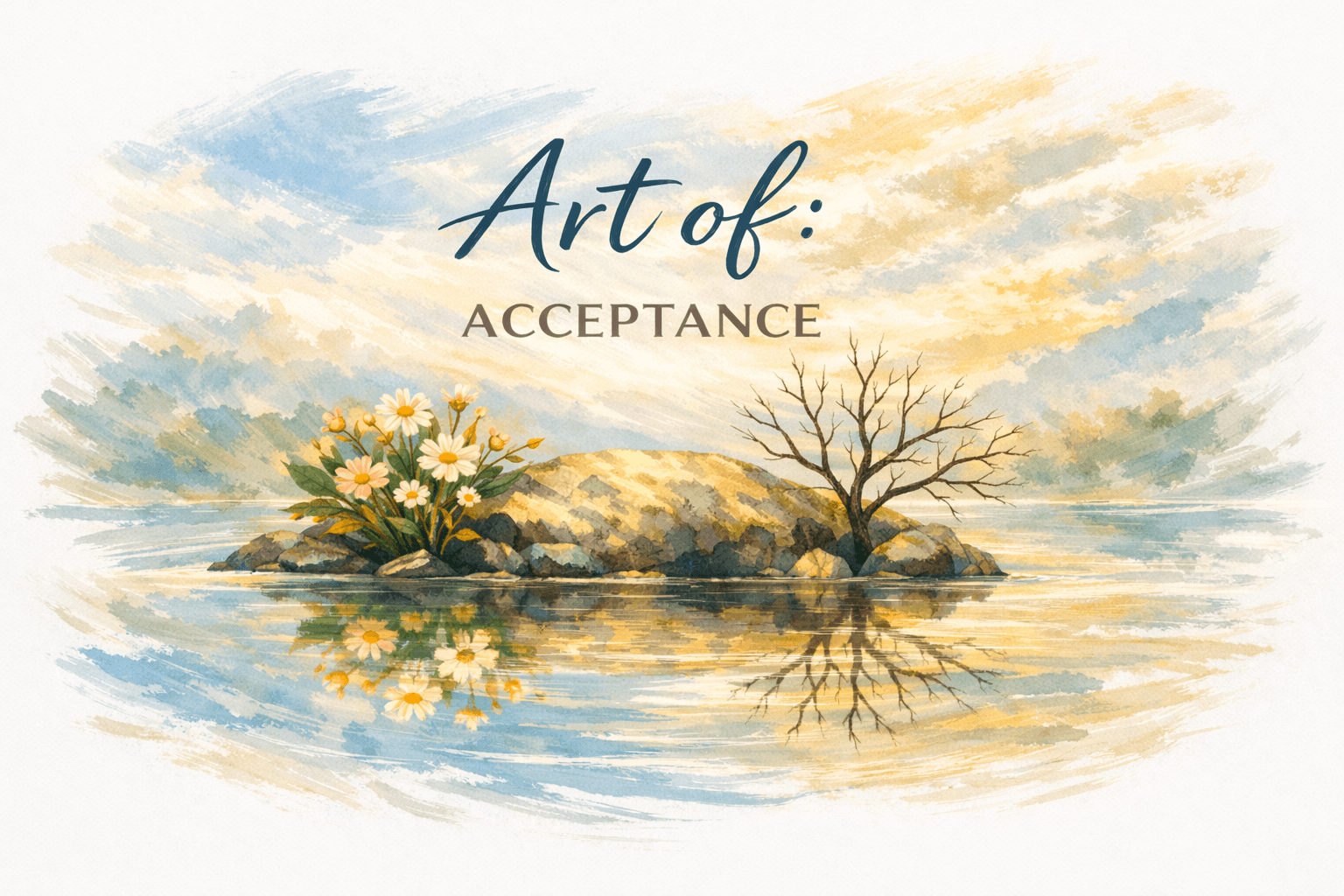
A Reflection on Acceptance
Acceptance is often mistaken for surrender. We imagine that if we accept something painful, we are agreeing with it. That acceptance means approving of what happened, tolerating harm, or giving up the hope that things could be different. But acceptance is not agreement, and it is not approval. Acceptance is the willingness to see reality clearly enough that we can finally respond to it.
In psychology, this idea is sometimes called radical acceptance. Radical acceptance does not mean liking reality. It means fully acknowledging it. It is the moment we stop arguing with what has already occurred. When something painful happens, the mind naturally resists. This shouldn’t have happened. This isn’t fair. This cannot be the way things are. These reactions are deeply human. They often arise from grief, anger, or shock. But when we stay locked in that internal protest indefinitely, our energy becomes tied to a battle with the past. Radical acceptance asks a difficult but liberating question: What happens if I stop fighting the fact that this happened?
Acceptance does not remove pain. Instead, it changes our relationship with it. When the mind stops resisting reality, the nervous system no longer has to stay in constant defense. Something softens. The body begins to settle. From that place, deeper healing becomes possible. This is often where forgiveness begins to emerge. Forgiveness is not about excusing harm or pretending the past did not matter. It is about releasing the ongoing burden of carrying resentment, shame, or anger indefinitely. Acceptance opens the door for forgiveness because it allows us to face the wound without continuing to relive it.
At the same time, acceptance is not the absence of boundaries. In fact, boundaries often become clearer once reality is seen for what it is. When we stop wishing someone were different, we gain the ability to decide how we want to engage with them moving forward. Forgiveness may allow us to release resentment, but boundaries determine how we protect our well-being in the present. A person can accept what someone did, forgive the weight of the past, and still choose distance or change in the relationship. Acceptance, forgiveness, and boundaries are not opposites. They are complementary practices that support both compassion and self-respect.
Acceptance is not passive. It is an act of courage. It requires honesty about what is true and humility about what cannot be controlled. When acceptance deepens, something subtle begins to shift. Energy that was once spent resisting reality becomes available again. The present opens. Choices widen.
Like growth, acceptance is not a single moment of insight. It is a practice. It is the quiet return to reality, again and again, with patience and curiosity. And through that practice we discover something important: freedom does not come from controlling every experience life brings. It comes from learning how to meet those experiences with clarity, wisdom, and care.
This reflection was written by,
Roger Lee Crowe III, LCSW Owner/ Psychotherapist Art of Growth Counseling Services, PLLC.
Art of: Acceptance
This reflection is part of the Art of: series,
You don’t need to read these in order.
You don’t need to agree with everything.
You don’t need to be ready.
Growth starts wherever you already are.
This series is here to support you at your pace, in your own way.
It's Your Time