Resources
The Work of: EMDR
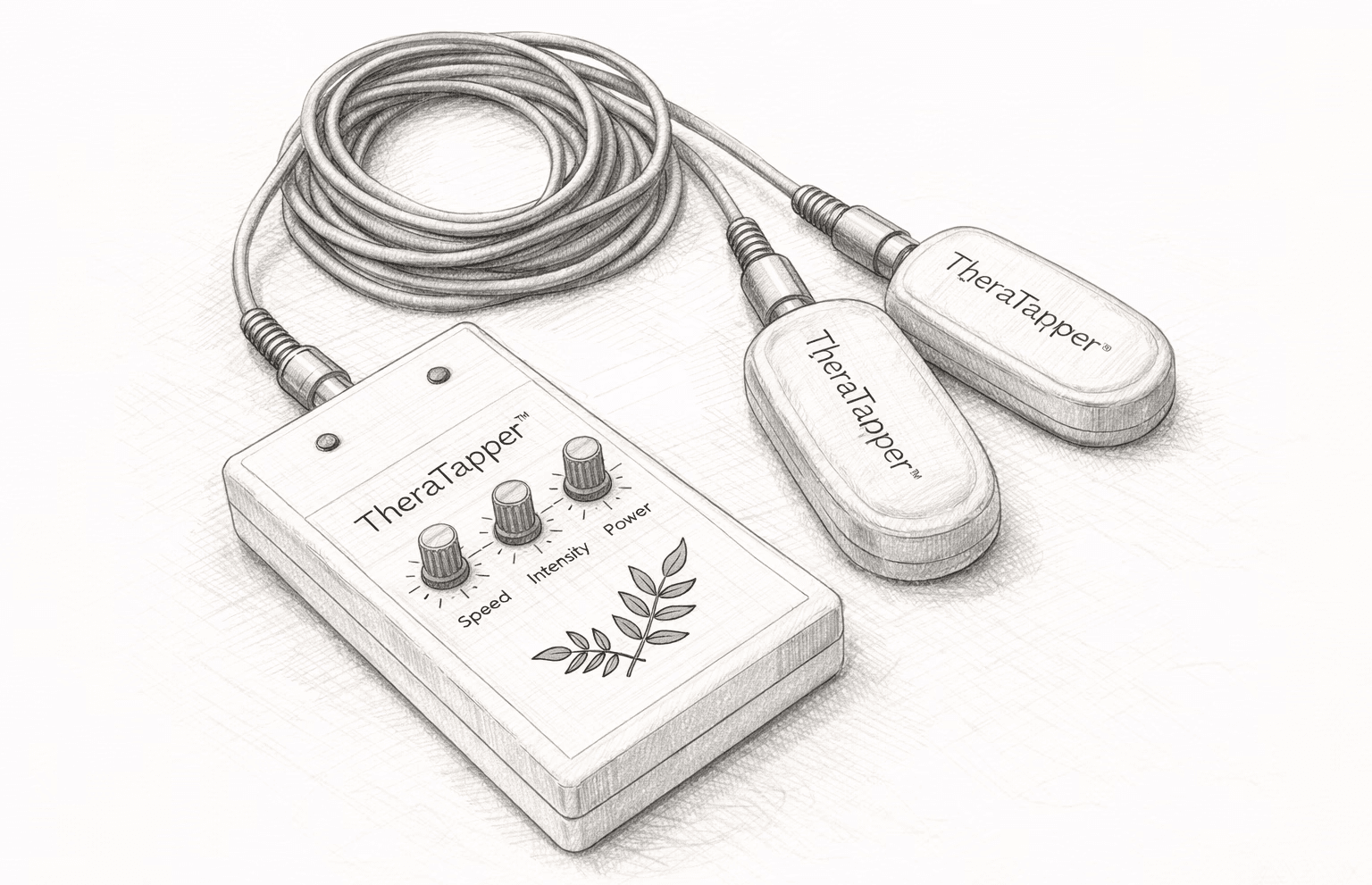
(Pictured in the image above are tappers used for EMDR. You hold one in each hand while it vibrates from side to side)
Many people assume that healing from difficult experiences requires talking about them in detail.
Sometimes that is true. But sometimes people find that the more they talk about certain memories, the more activated they become. The story gets clearer, yet the emotional charge remains. The body still reacts. The same images, sensations, or beliefs return again and again. This is where approaches like EMDR can be helpful. EMDR stands for Eye Movement Desensitization and Reprocessing. It was developed by Dr. Francine Shapiro. It is a therapy designed to help the brain process memories that have not been fully integrated.
When Memories Stay Stuck
EMDR is based on what is called the Adaptive Information Processing (AIP) model, also developed by Dr. Francine Shapiro. This model suggests that the brain naturally moves toward healing, integrating experiences in a way that allows them to be understood without overwhelming the system. Under normal circumstances, the brain processes daily experiences and stores them in a way that allows us to learn from the past without reliving it. But when something overwhelming happens, that process can become disrupted. Instead of being stored as a past event, parts of the experience remain active in the nervous system. This is why certain memories can feel so vivid or intrusive. It is also why people may react strongly to reminders of events they logically know are over, the brain has not fully filed the experience away. EMDR helps restart that natural processing so the brain can complete what was left unfinished.
Why Bilateral Stimulation Matters
One of the unique elements of EMDR is the use of bilateral stimulation — alternating stimulation of the left and right sides of the body. This is often done through guided eye movements, tapping, or handheld tappers. While focusing briefly on a memory or feeling, the client follows this left-right stimulation. Researchers believe this process may help the brain activate networks involved in memory integration, allowing information that was stored in a fragmented way to reconnect with other parts of the brain. As this happens, the brain begins to update the memory.
Many people notice that the emotional intensity decreases.
New insights may appear.
The memory becomes something that happened rather than something that continues to happen internally.
What EMDR Feels Like
EMDR sessions are structured but flexible.
EMDR follows a structured, phased approach that includes preparation, identifying targets, reprocessing, and integration. Much of the early work focuses on building internal and external resources so that when processing begins, creating a sense of safety, grounding, or support. These resources help ensure that the work is not just effective, but sustainable. At different points in the process you may focus on a memory, a belief about yourself, an emotion, or a body sensation. During this time the therapist guides short sets of bilateral stimulation. After each set, you simply notice what comes up.
Sometimes this is a new thought.
Sometimes an image.
Sometimes a physical shift in the body.
There is no need to force anything or explain every detail. The brain often moves through associations naturally, linking experiences together in ways that allow them to be processed. For many people, this process feels different from traditional talk therapy. The emphasis is less on analyzing and more on allowing the brain to reorganize information.
What EMDR Can Help With
EMDR is widely used for trauma and post-traumatic stress, but it can also help with experiences that continue to influence how someone sees themselves or the world.
This may include:
traumatic memories
persistent anxiety
limiting self-beliefs
overwhelming past experiences
distressing images or intrusive thoughts
emotional reactions that feel disproportionate to the present situation
The goal is not to erase memories, but to reduce their emotional charge and update the way they are stored in the brain.
What EMDR Cannot Do
Like any therapy, EMDR has limits. Some memories resolve quickly, while others take more time and preparation.
If you are in the middle of an ongoing traumatic situation EMDR will likely not be as effective. It is also most effective when you feel safe, supported, and ready to engage in the process. EMDR also works best as part of a broader therapeutic relationship that includes stabilization, emotional regulation, and meaningful change in everyday life.
In other words, EMDR is a tool — not the entire process of healing.
The Work of EMDR
Despite the technology involved, EMDR is not really about eye movements or tapping. It is about helping the brain reprocess information that was stored during moments of overwhelm.
The therapist provides structure and guidance. The real work is done by your brain and nervous system. From the outside, the process can look simple: short sets of stimulation, brief pauses, and moments of reflection. Inside, however, the brain may be connecting pieces of experience that were once fragmented.
Memories link with new information.
Old emotional responses soften.
The nervous system recalibrates.
The past does not disappear. But it begins to sit where it belongs , in the past. And when that happens, people often find they have more freedom to respond to the present with clarity rather than reaction. It is structured work. But within that structure, the brain is doing something remarkably natural:
learning how to release what was once necessary for survival, but is no longer needed in the present.
This resource was written and provided by,
Roger Lee Crowe III, LCSW Owner/ Psychotherapist Art of Growth Counseling Services, PLLC.
Video Resource
Watch this video to gain further insights on EMDR from EMDRIA.
It's Your Time